January 2026     Edition 188
Second Order Thinking

Seeing Beyond the Current Solution

Announcements

Next Critical Thinking Open Enrollment   One day workshop in two half days,
June 28/29
Follow us on Linkedin and Twitter

Most decisions in organizations

are made with good intentions and solid reasoning. Teams analyze the situation, evaluate options, choose a solution, and move forward. This sequence of analytical thinking followed by creative and critical thinking produces successful and productive results.  But it also creates a blind spot and a gap.


Second order thinking is the discipline that closes this gap

. It pushes us to look beyond the initial result and ask how the world will respond to our actions over time. If analytical thinking helps us understand the problem, and creative and critical thinking helps us choose a solution, second order thinking helps us understand the consequences of the solution.


At its core,

second order thinking is built around one simple question:

And then what?


This question is powerful

because systems push back. People adapt. Markets shift. Processes evolve. A decision that appears clean and rational at first can trigger ripple effects that are delayed, indirect, or unintended. Without second
-
order thinking, those consequences often catch us by surprise and may lead to outcomes that undermine the original goal or introduce new risks and problems.


Consider a common example:

a team reduces headcount to cut costs. The first order effect is immediate savings. But the second order effects; lower morale, slower service, increased turnover, and loss of institutional knowledge may ultimately cost far more than the initial savings. The decision wasn
’t wrong, it was incomplete.


Or consider a modern example

: an organization deploys an AI tool to automate routine customer inquiries. The first order effect is reduced call volume and faster response times. But the second order effects may include a surge in complex cases routed to human agents, increased training demands, or shifts in customer expectations about 24/7 availability. Again, the initial decision may be sound, but without second order thinking, the downstream implications remain unexamined and potentially unaddressed.


Second order thinking requires us to extend our time horizon and widen our field of view

. It asks us to imagine how stakeholders will react, how incentives will shift, and how today
s solution might create tomorrow
s constraints or crises. It is not about predicting the future with precision, it
’s about anticipating the consequences.


Second

-

order thinking is the mechanism that elevates strategy beyond planning.

It
’s the lens that shows how a single choice influences the broader environment. It provides the mechanics for that insight, ensuring our plans account for how people respond, how conditions evolve over time, and how the consequences of our solutions shape what comes next.


The Takeaway: 
In a world of evolving complexity first order thinking is not enough. Leaders who consistently ask

and then what


make decisions that are more resilient, more adaptive, and more aligned with long term success. Second order thinking strengthens decisions, ensuring that solutions remain solutions over time.

If you like this edition,

click here to get a Free Subscription to The Headscratcher Post.

  A monthly post with tips and techniques about problem solving, creativity, innovation and critical thinking.

PLACE HOLDER
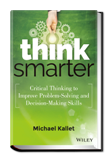
Think Smarter Book Image

Check out our Workshops

• Critical Thinking for Problem Solving and Decision Making (Core, Core+Advanced)
• Advanced Critical Thinking and Innovation
• Advanced Critical Thinking and Decision Making
• Critical Thinking for Supervisors, Managers and Leaders

Visit us at www.headscratchers.com


If you're not already a subscriber to The HeadScratcher Post,
Signup Here

Previous versions of The HeadScratcher Post
HeadScratchers

Critical Thinking Techniques for Problem Solving, Decision Making, Innovation and Leadership.
Our Mission;

To help people become better HeadScratchers! We teach critical thinking techniques to managers, leaders and individuals resulting in the improved performance of an individual and organization.